"Should we build native or cross-platform?" is one of the first questions founders ask us. It matters, because the choice affects your budget, your launch date and how easily you can hire later. It is also less dramatic than it used to be: modern cross-platform tools are excellent, and most users can't tell the difference.
The options in plain terms
- Native means two separate apps: Swift for iOS and Kotlin for Android. You get full access to every platform feature and the best possible performance, but you build most things twice.
- Flutter uses one codebase written in Dart and draws its own interface. It is fast, consistent across platforms and great for custom, brand-heavy designs.
- React Native uses one JavaScript or TypeScript codebase that renders real native components. It shines when you already have a React web team or want to share logic with a web app.
When cross-platform wins
For most MVPs and business apps, we recommend Flutter or React Native. You ship iOS and Android at the same time with one team, and every bug fix and feature lands on both platforms at once. That usually means noticeably less build effort, and lower running costs, than two native apps.
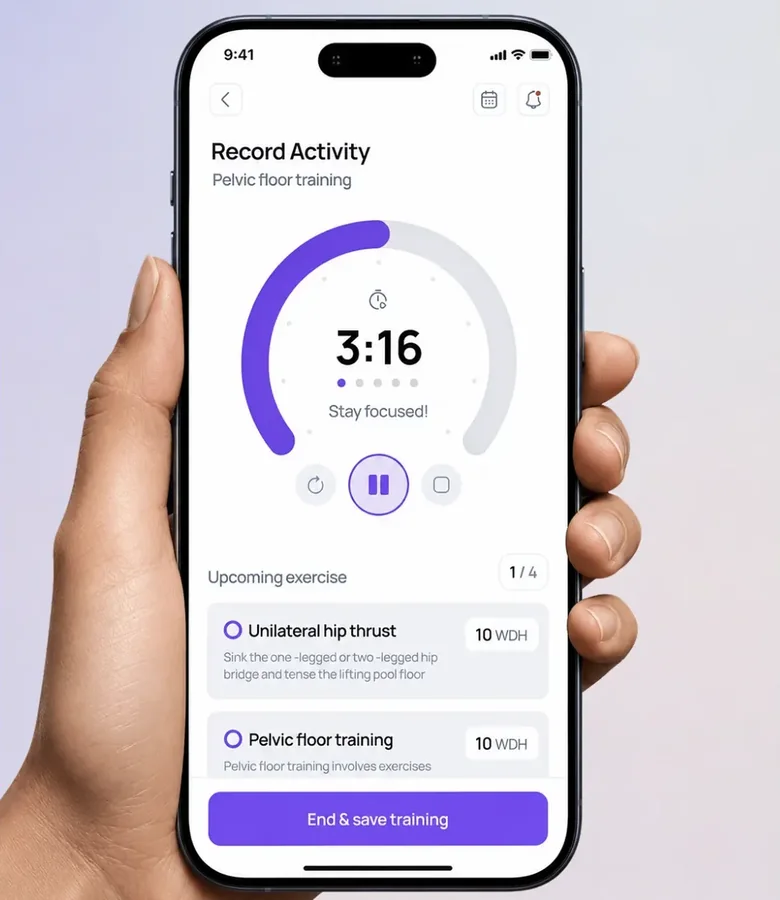
Cross-platform is a strong fit when your app is mainly forms, lists, content, dashboards, booking or messaging, which covers the majority of products. Our MS Buddy app, for example, uses Flutter for guided exercise sessions and symptom trackers on both platforms from one codebase.
When native is worth it
Native development earns its extra cost when the platform itself is the product:
- Heavy use of device hardware: advanced camera work, Bluetooth medical devices, AR or continuous background processing.
- Demanding graphics or real-time audio and video where every millisecond counts.
- Deep integration with platform features such as widgets, watch apps, CarPlay or HealthKit on day one.
- A mature product with separate iOS and Android teams already in place.
Choose the stack for the product you are building in the next 12 months, not the one you might build in five years.
Five questions to decide
- What does the core experience depend on? If it is mostly screens and data, go cross-platform. If it is hardware or graphics, lean native.
- How fast do you need both platforms? Launching on iOS and Android together strongly favours one codebase.
- Who will maintain it? A React web team makes React Native a natural fit; a fresh team can pick whichever we can hire for most easily.
- Do you need a web app too? React Native with a shared TypeScript core can save real time.
- What is the budget for year one? Remember that two native apps mean two sets of updates, forever.
If you are still unsure, that usually means cross-platform is fine. You can always rebuild one critical screen natively later. The reverse, merging two native apps into one, is much harder.
We build both kinds of app in our mobile app development work, and choose the stack per product.